


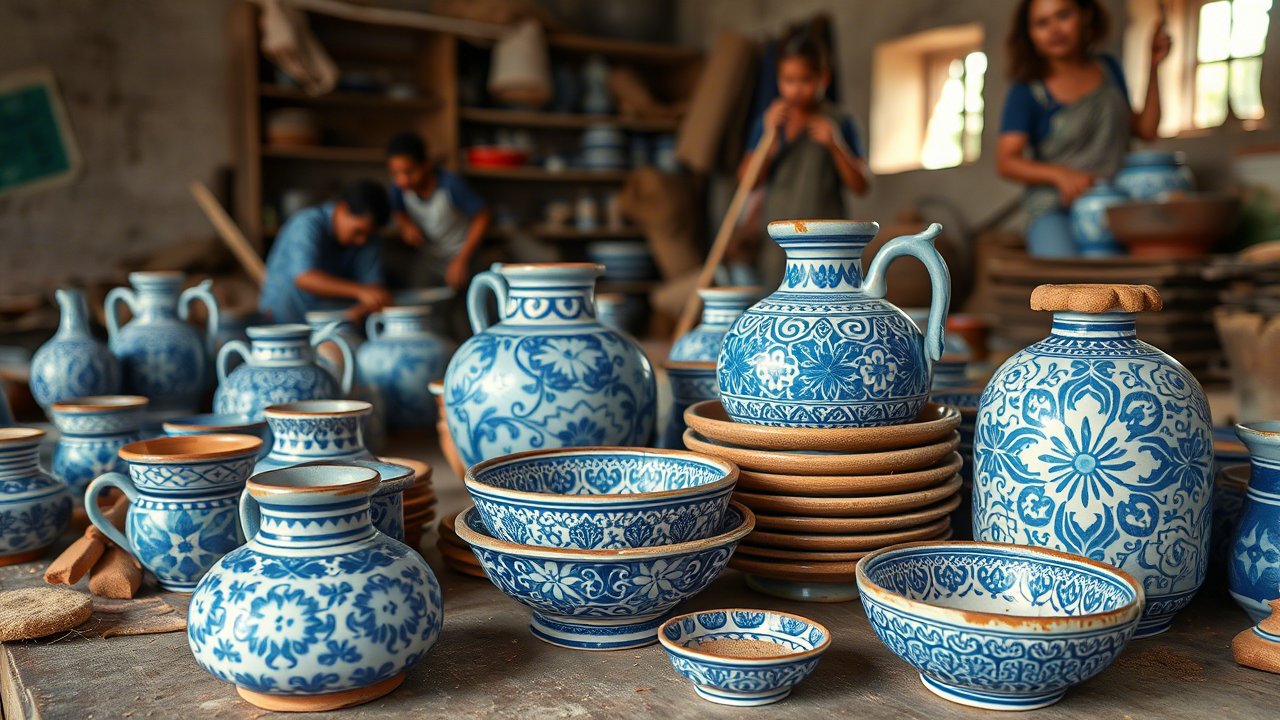
Multani Blue Pottery: Amazing 7 Secrets of Origins, Techniques & Timeless Traditions
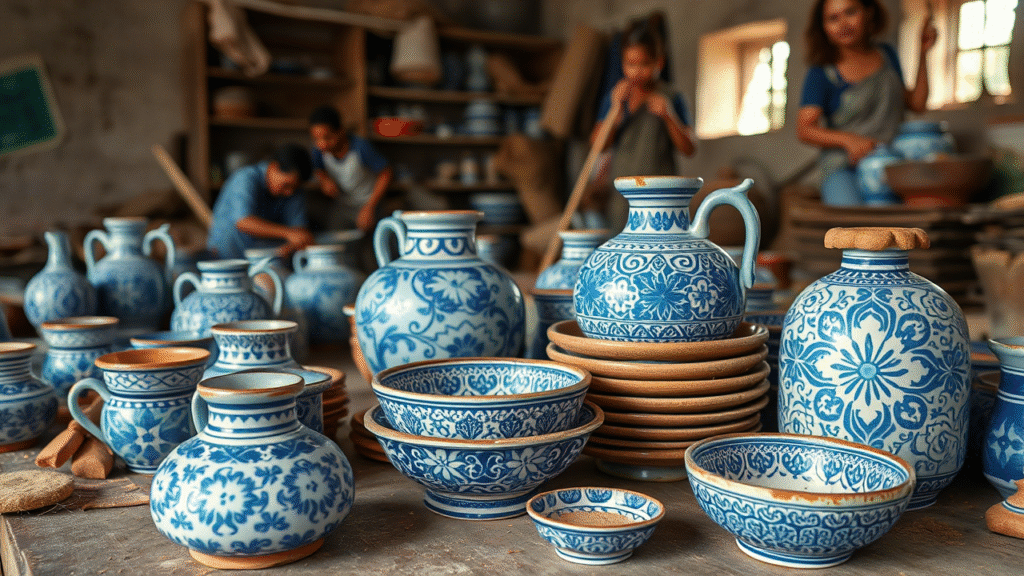
Introduction
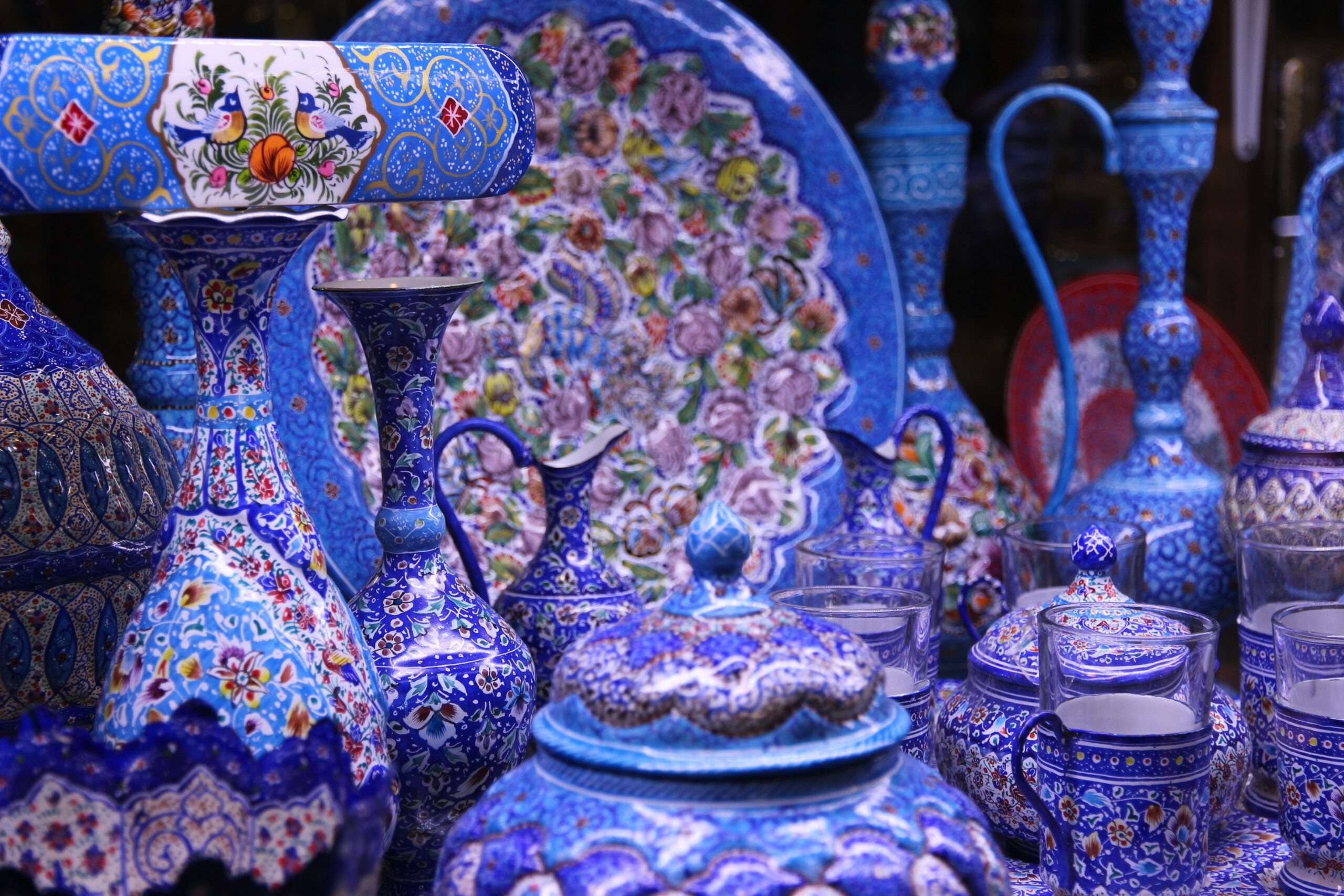
When it comes to the diverse cultural heritage of India, textiles, forts, and art usually come to the forefront, however, one of its best-kept secrets is Multani Blue Pottery. This distinctive form of pottery, which originally came from Multan in what is now Pakistan, has crossed oceans and centuries, and became an emblem of Indo-Islamic art and strength.
In this article, we will examine the history, uniqueness and intricacies of Multani Blue Pottery, and how they inspire both artisans and artisans collectors alike. We will explain its evolution from the Persians to what it once was in Rajasthan and the signature cobalt blue tones and detailing that make this pottery form so one-of-a-kind.
Table of Contents
Origins: A Journey Through Time and Geography
The emergence of Multani Blue Pottery took place not in India itself, but in Central Asia and Persia separately, where Islamic practices integrated glazed ceramic arts. The technique reached the Indian subcontinent in the Mughal era , when Persian makers brought to the royal courts the tile-making that they had learned in their nation, along with blue-glazed ceramics.
The name “Multani” pertains to Multan, in the province of modern-day Punjab in the nation of Pakistan. Multan is known as the “City of Saints” and was once an active trade hub along the Silk Road, and a centre of culture. The local potters here began to apply the Persian techniques they had come across and combined them with local styles to create Multani Blue Pottery .
Multani Blue Pottery differs from the conventional earthenware or stoneware styles that use clay in more or less its original state. Rather, it is made from a different combination of quartz powder, glass, and borax, allowing for craftwork very similar to other glazed art forms, although finer and greater quality. This allowed makers to make thinner and very delicate forms from lighter materials, and also to fit them at lower temperatures.
Due to the partition of India in 1947, several Multani artisans transitioned to Jaipur in Rajasthan, taking the secrets of this beautiful craft with them. Today, Jaipur is the main center for Multani Blue Pottery in India and the only city to preserve and promote it as a live part of India’s intangible cultural heritage.
Techniques: The Art of Precision and Patience
The multani blue Pottery making process is lengthy, precise, and requires great skill, precision and knowledge of chemistry and design. Here’s a step-by-step look at how the beautiful objects are created:
1. Preparation of the dough-like mixture
As stated earlier, Multani blue pottery uses a composite (combination) material instead of natural clay. Potters prepare a composite material by using a combination of:
Quartz Powder (for hardness)
Glass Powder (for translucent-ness)
Boric Acid (as a binding agent)
Gum Tragacanth (to give the material elasticity)
The mixture is kneaded-in, like bread dough, to a dough-like material that is allowed to rest before it is shaped.
2. Hand-Molding Without a Spinning Wheel
One of the things that I find fascinating about Multani blue pottery is that the process of making the pottery is by hand-molding it rather than spinning it. Artisans mold all of the pieces with plaster-of-paris molds. They mold all the types of objects like plates, vases, planters, decorative tiles, jewelry boxes, etc.After the mixture is pressed into the mold, excess material is cut off and the object is gently removed after the piece has dried. This method works well for having the same size and shapes, and is especially useful in creating elaborate shapes and designs.
3. Drying and Biscuit Firing
Following the shaping phase, the items are left air-dried for several days, until they are sure to hold their shape. Once dried, they go through the first firing, or biscuit firing, in a kiln at a temperature of about 800° C. At this stage of firing, it is the structure and not the glaze which is hardened.
4. Underglaze Painting
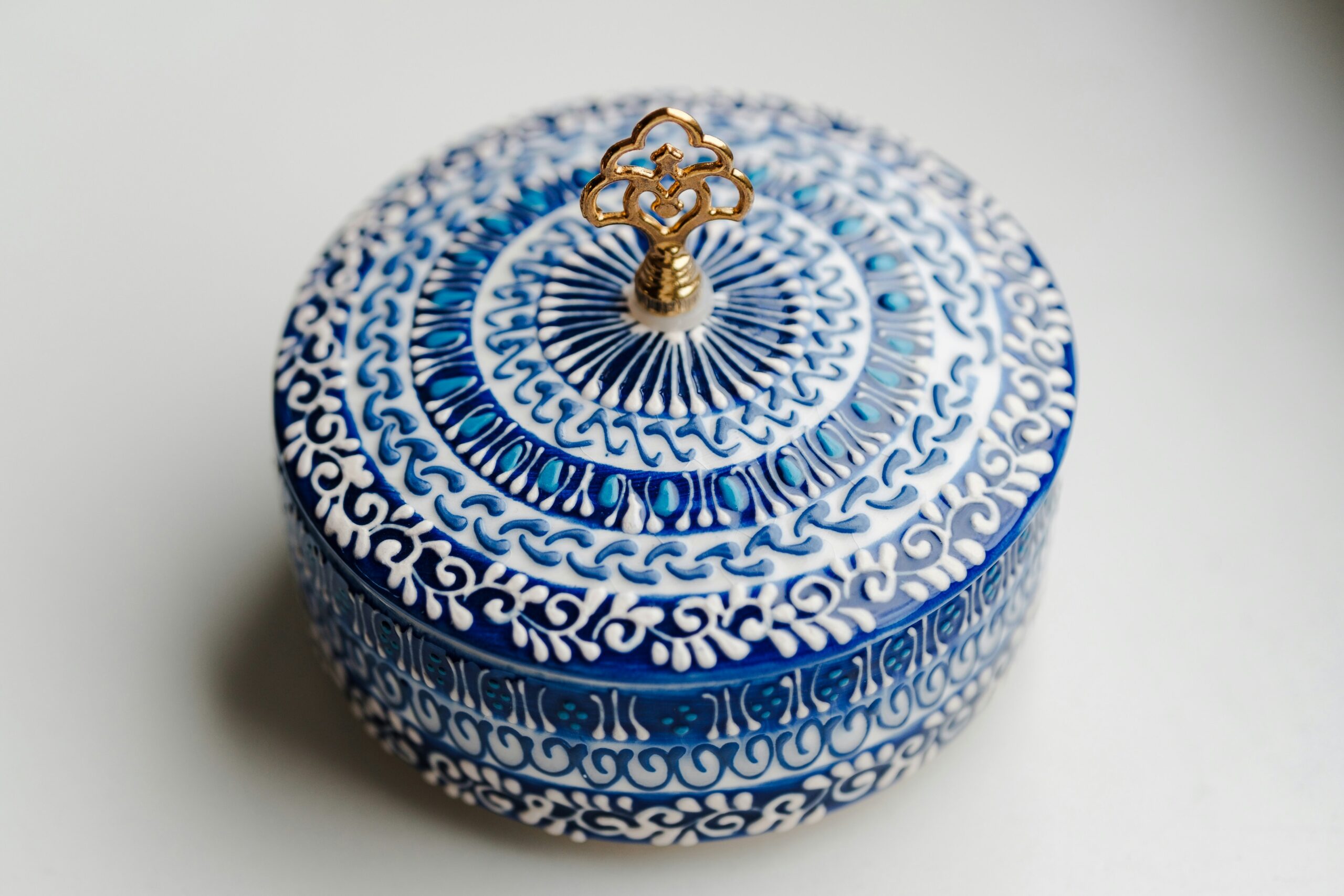
Here comes the artisanal hand-painting phase. After the first firing, artisans use underglaze colours to paint decorative designs of intricate floral, geometric and arabesque patterns, in primarily cobalt blue, white, turquoise, and manganese purple.
Inspiration for the designs are taken from pottery painted in the styles of Persian miniatures, Mughal architectural patterns and Arabic calligraphy , all together a euphoric mix of these cultural influences.
5. Glazing and Final Firing
After the painting, it is time for the transparent glazing process, which will gloss the piece . The piece is then placed into a second firing, at a slightly lower temperature than the first. Here the glaze becomes fused to the surface of the pottery, enhances the colours, and makes the pottery waterproof and durable.
Each item will be different and will bear the signature of the hand-painting artisan. Even if the process is quite structured, there remains room for individual creativity within the process, and also opportunity for improvisation.
Traditions: Symbols, Motifs, and Cultural Significance
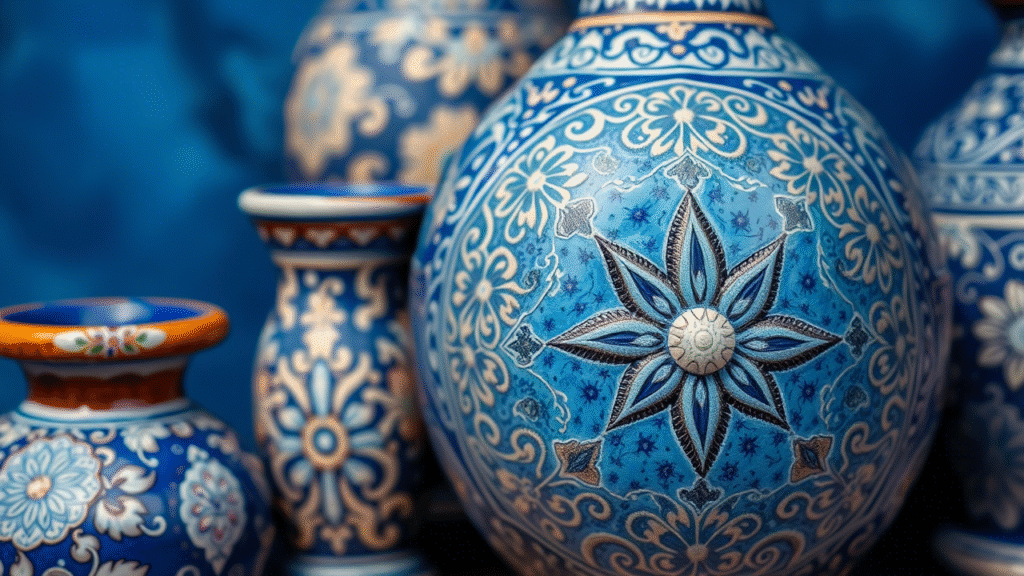
More than merely decorative art, Multani Blue Pottery represents deep cultural and symbolic meaning. The motifs chosen are not arbitrary — it reflects centuries-old belief systems, aesthetic preferences, and spiritual symbolism.
Floral Motifs: Taking inspiration from Persian gardens, flower designs in pots represent growth, beauty, and proportional balance with the divine.
Geometric Motifs: Pattern of symbolic values that illustrate order, symmetry and the mathematical appreciation of craftsmanship contained in Islamic art.
Arabesques: Flowing, intertwining designs representing infinity and that creation (as we know it) is eternal.
Calligraphy: Calligraphy is not usually included, and when used, it is in the form of a verse from the Quran or poetry.
Motifs are not just beautiful, but have philosophical and religious meanings, and depict the world view of the potter and the patron.In the past, much of the use of Multani Blue Pottery was in architecture and was particularly used widely in mosques, tombs, and palaces. Colourful tiles would be attached to walls, or domes in order to create dazzling roofs that would last.
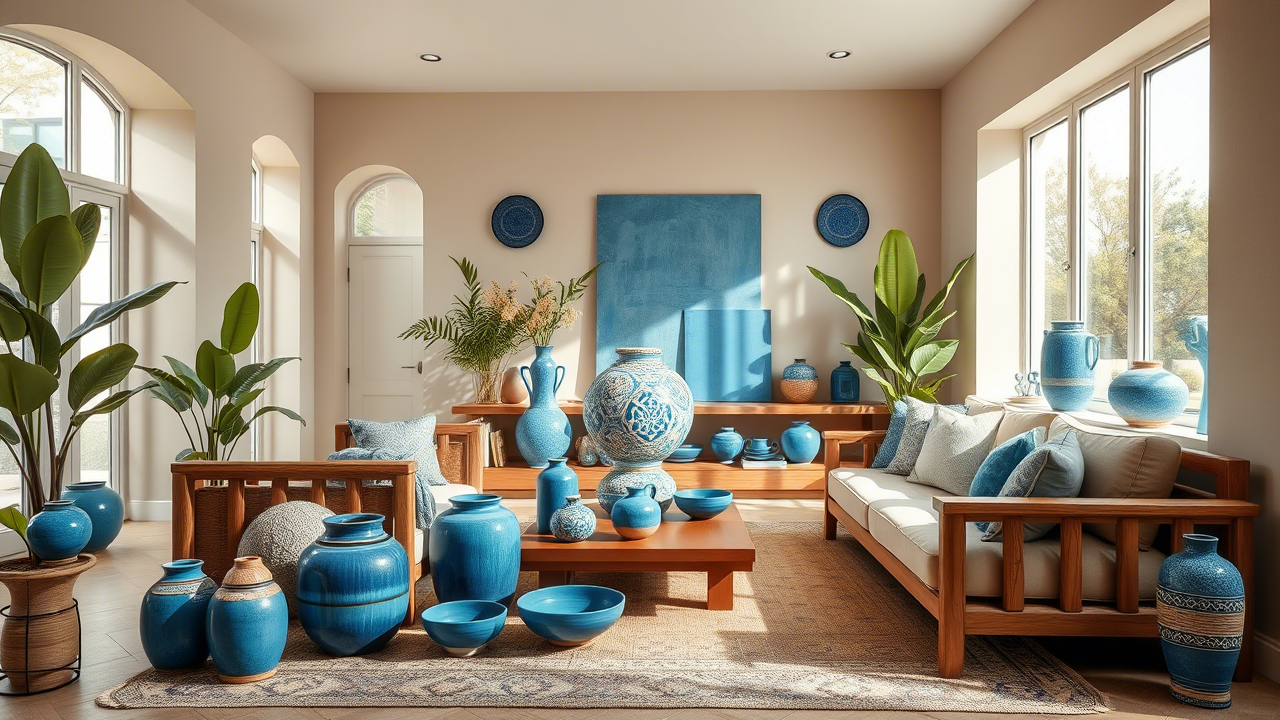
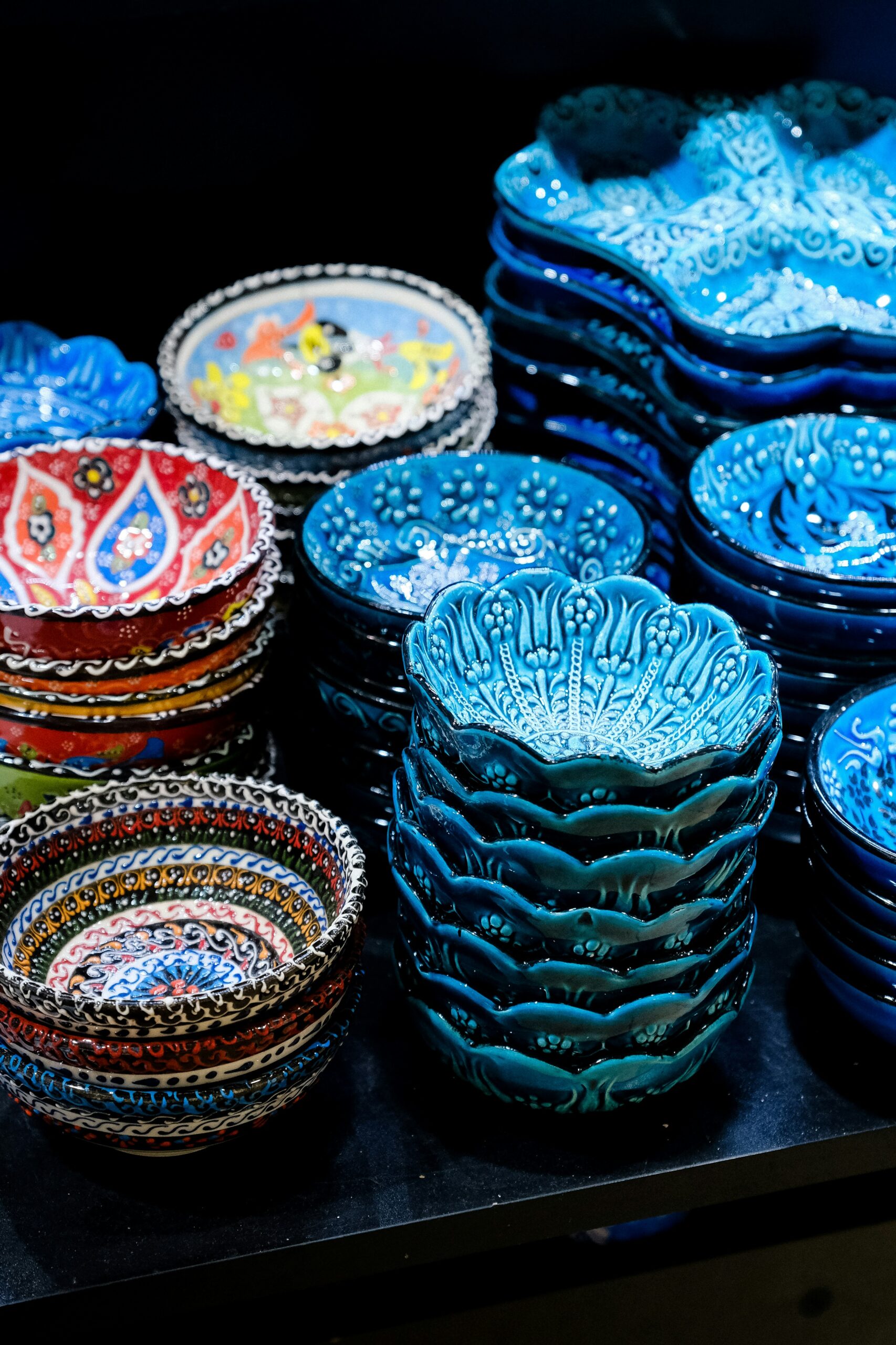
In contemporary terms, it has not reached architectural usage but it has extended to tableware usage and hopeful opportunities in home décor and decorative fashion. Items such as plates, coasters, lamps, and earrings all represent the easiest means of recognition of the blue and white aesthetic of Multani Pottery.
Revival and Contemporary Relevance
Multani Blue Pottery, while traditionally important culturally for artisans, was nearly lost due to industrialization and changing consumer preferences in the mid-20th century. Fortunately, Multani Blue Pottery has been restored to real prominence, particularly in Jaipur, as a result of government and NGO support, combined with the dedication of the artisans in producing, weaving and crafting it.
Now, there are great NGOs such as the Anokhi Museum of Hand Printing, Raza Foundation, and Dastkar that work in close collaboration with potters to ensure traditional skills remain, whilst also encouraging innovation. Designers work with master artisans to try and create new products that cross-pollinate traditional skills and contemporary products. The hope is that by creating authentic pieces with regional sustainability, the crafts will go global.
Moreover, the Multani Blue Pottery craft has been assigned Geographical Indication (GI) Protection, enabling artisans to have legal recognition, protecting it by law from replicas made without the acknowledgement of the artisan field. Within GI status is a recognition of its origin and protection from ‘similar’ reproduction. It is protected by law that only potters, artisans with the following designations, living in GI designated areas can use the term.
Challenges and the Road Ahead
Despite the positive signs surrounding the resurgence of Multani Blue Pottery, there are still fundamental challenges to address:
Decreasing availability of raw materials: Some sources of raw materials such as gum tragacanth, for example, are becoming increasingly scarce.
The apprenticeship culture is dwindling: Economic returns and labour intensity make the craft less appealing to younger people.
Competition from machine made versions: The handmade character of original pieces is threatened by imitation products, which are sold at a lower price point through mass production, flooding markets.
To alleviate these issues, multi-stakeholder and socially and environmentally sustainable actions and international trade responsiveness are being explored. Initiatives such as workshops, online learning modules and international exhibitions, are enabling all interested parties to raise awareness of Multani Blue Pottery and attract a renewed interest by younger stakeholders.
Conclusion: A Living Legacy
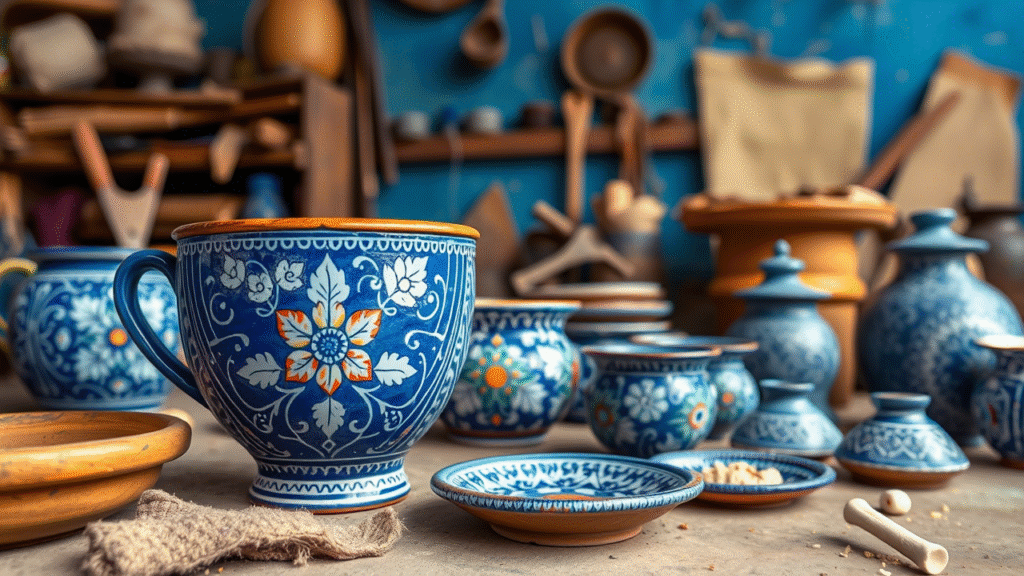
Multani Blue Pottery is not only a traditional craft but also a living legacy of cultural exchange, creativity, community and human endurance. Emerging from the great deserts of Central Asia, nurtured between the bazaars of Multan, and reborn again in the beautiful pink city of Jaipur, this craft continues to bring joy to people worldwide.
Among many other things, its journey tells us a lot about how tradition is capable of surviving in a modern world, and how beauty resonates not only through the object, but also through the stories and traditions of the people making it.On this auspicious occasion of celebrating this special craft, let us take a moment to recognize that each and every stroke on a Multani Blue Pottery product is a contribution to centuries of applied art — a heritage which should be recognized, preserved, and passed on.
What is Multani Blue Pottery?
Multani Blue Pottery is a centuries-old ceramic art form originating from Multan, Pakistan. Known for its vibrant cobalt blue and turquoise hues, it features intricate hand-painted floral and geometric patterns on lightweight, glazed earthenware crafted using traditional techniques passed down through generations.
Why is Multani pottery called ‘blue’ pottery?
It’s called “blue pottery” because of the dominant use of striking cobalt blue pigment in its designs, derived from natural minerals. This signature color, along with turquoise and white, creates the art form’s iconic, eye-catching aesthetic inspired by Persian and Central Asian styles.
Is Multani Blue Pottery eco-friendly?
Yes! Multani Blue Pottery is made from natural materials like quartz, powdered glass, and clay, and fired at relatively low temperatures. The dyes are mineral-based, and no plastic or synthetic coatings are used making it a sustainable and environmentally friendly craft.

Leave a Reply