


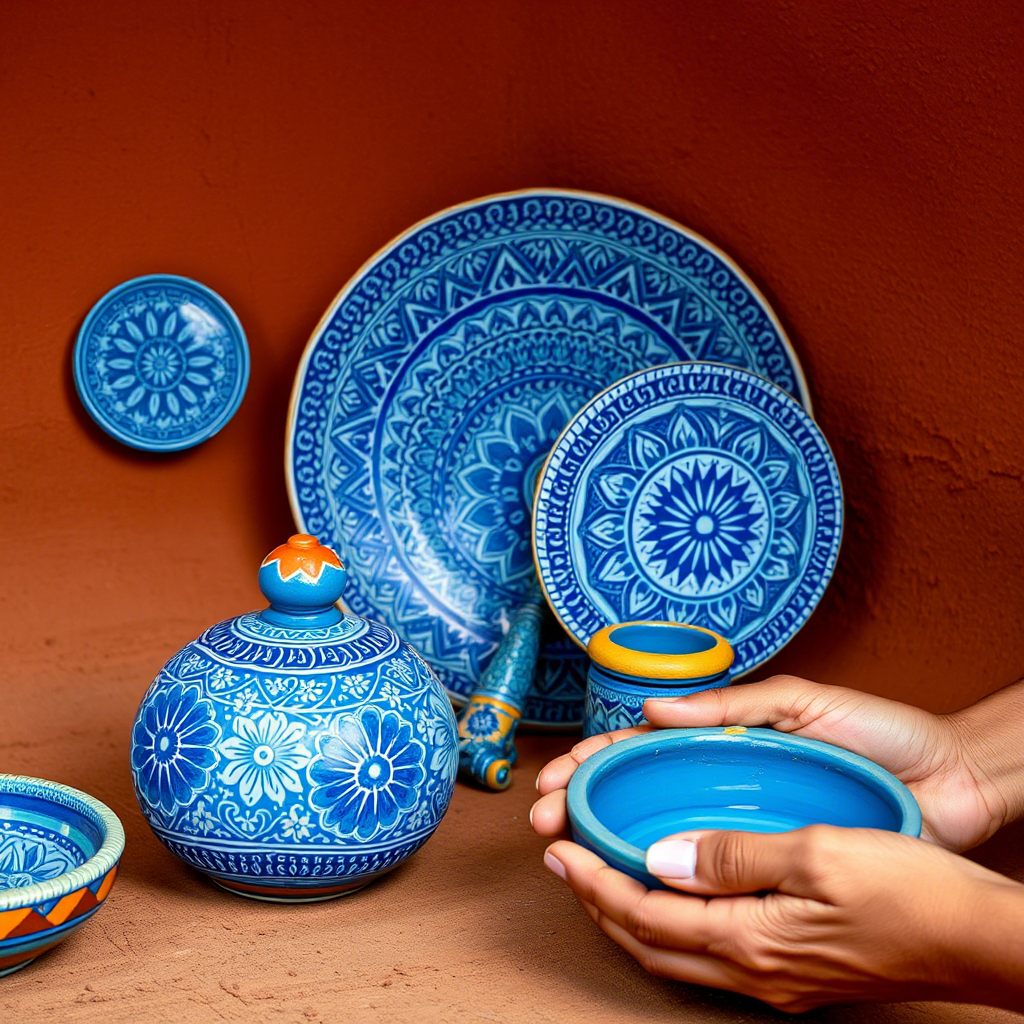
Multani Blue Pottery: 8 Stunning Reasons This Handcrafted Heritage Treasure Will Captivate Your Home
Introduction
Multan is an artistic, historical, cultural gem, located in Punjab, Pakistan and often referred to as the “City of Saints.” Multan is known for its spiritual history, however, it is also revered for a craft form that spans the generations and is a legacy that history can not slightly alter; that of Multani Blue Pottery. It isn’t just pottery, its meaning communicated in clay, color, and years of tradition.
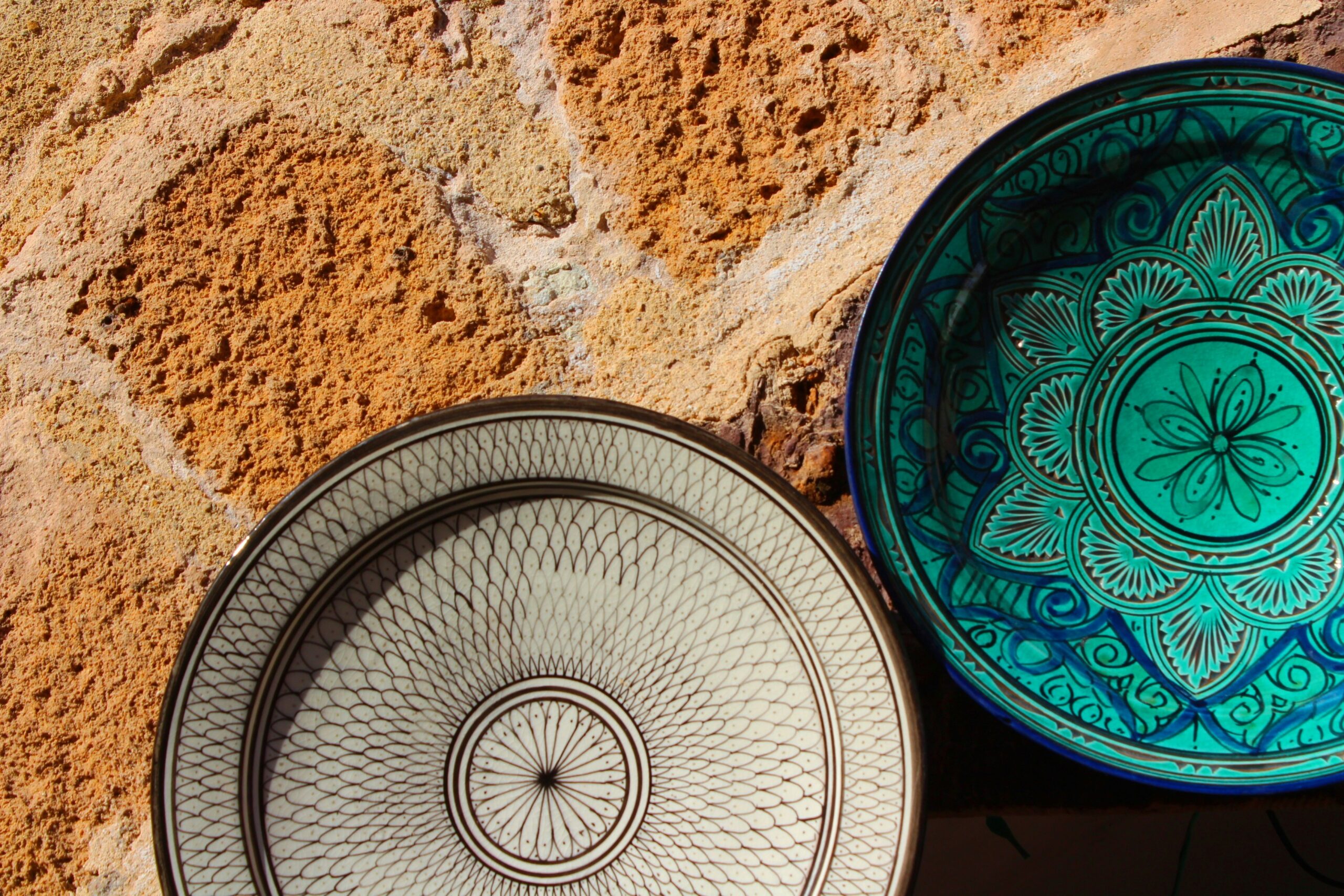
When you hold Multani blue pottery, you are not simply holding some pottery, you are holding history. The soft turquoise color, floral patterns, or delicate calligraphy recount stories from the Mughal era, a time when art was supported through royal patronage, and all art forms flourished. However, this is not simply history for history’s sake, it is a tradition that is alive and celebrates the hand of the artist, and continues to inspire artists and art lovers alike in Multan today.
Table of Contents
1.The Origins: A Legacy Passed Down Through Generations
Multani blue pottery has a long and fascinating history, spanning many centuries, and weaves together influences from Persian, Central Asian, and indigenous South Asian traditions. Some people believe the craft became known during the time of the Mughal emperors when highly talented artisans were brought from Persia to bedeck the interior and exterior surfaces of their palaces and tombs with extraordinary glazed tiles; whereas others believe that the craft was organically developed in Multan, as potters experimented with glazes and pigments to create something distinctly their own.
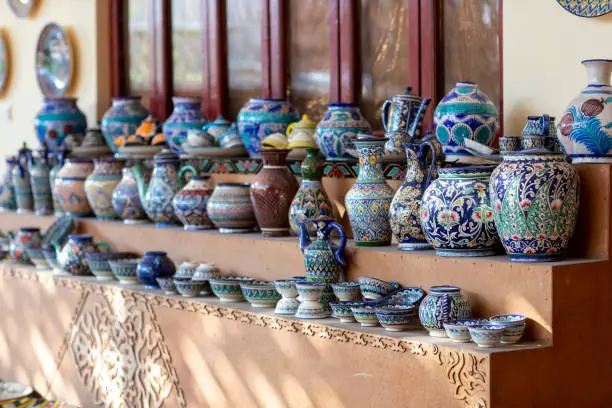
What is most fascinating about this craft is that it has been passed down through generations of artisans who have succeeded to sustain it for so many years. In many cases, families of potters pass down the craft over multiple generations and in doing so transfer tools, techniques, and secrets from parent to child, thus sustaining the cultural soul of their craft. There are many places in Multan, that are known more generally for pottery, where you could enter any neighborhood, knock on any door, and find artisans at work as a community, every person sustaining their existence and enriching the creative tapestry of the world through simplicity and passion.
2.The Process: From Earth to Art
Unlike typical ceramics, Multani blue pottery is not made of clay alone. Porcelain and terracotta are made primarily from clay. Multani blue pottery is made from glass, quartz powder, and small amounts of white clay. which gives it translucency, strength, beauty, and durability.
Here is how a piece is created:
1.Preparation of the Dough:
Artisans mix ground quartz, glass frit, white clay, and water to create a smooth dough-like material. This combination helps identify Multani pottery from all other pottery styles and ultimately furthers artisans capabilities for detailing.
2.Molding and Shaping:
Artisans do not throw the material using a wheel, but rather shape it with molds cut from wood or plaster. The bowls, plates, vases, and tiles assume their multiple forms from molds and are generally decorated with motifs cut from other molded pieces before they dry.
3.Drying and Firing:
Once the molds have been filled, the shapes are left to dry for a period of days. After drying, the pottery is then fired in kilns at low temperatures. The first firing of pottery will not render color, but will harden the structure.
4.Glazing and Painting:
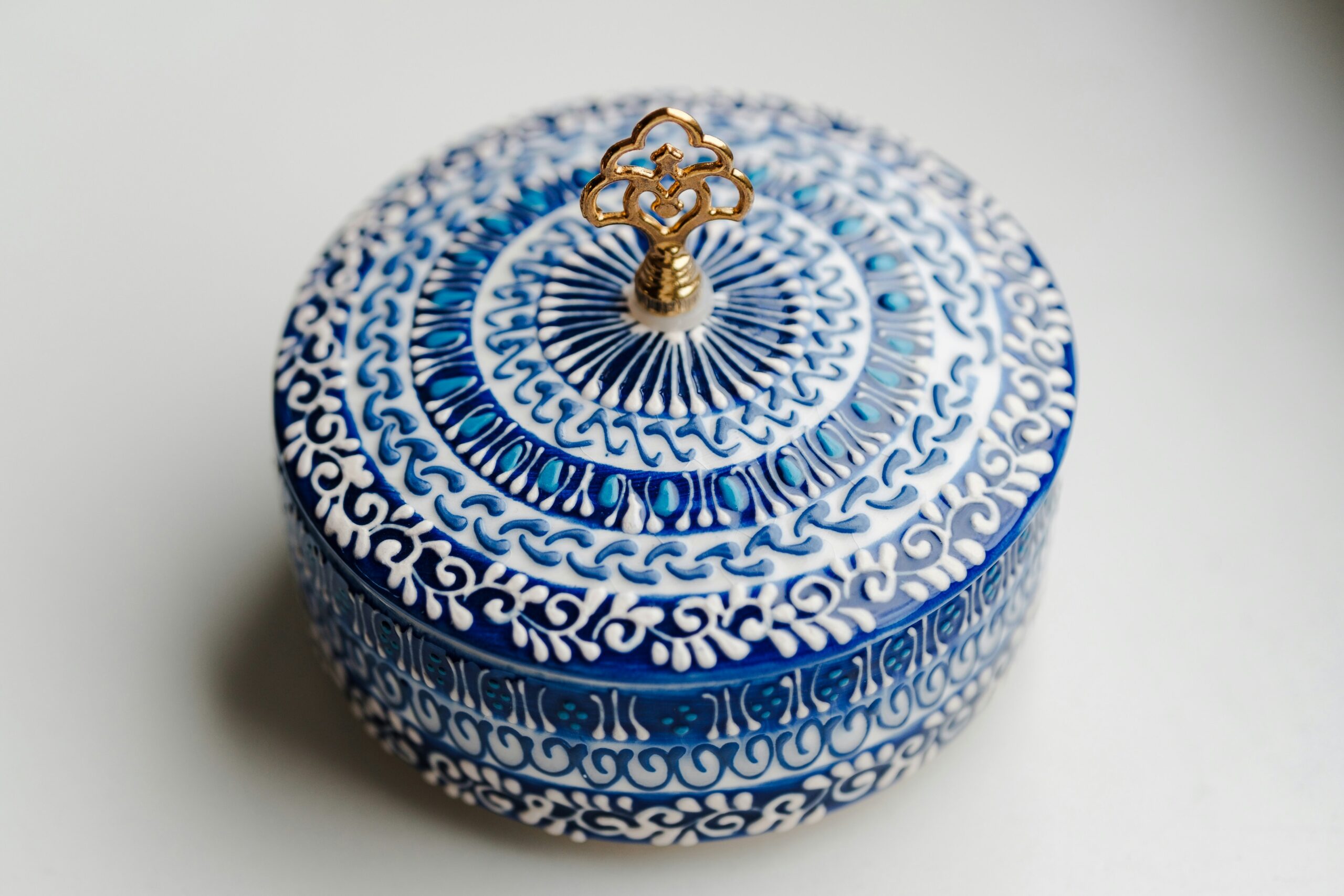
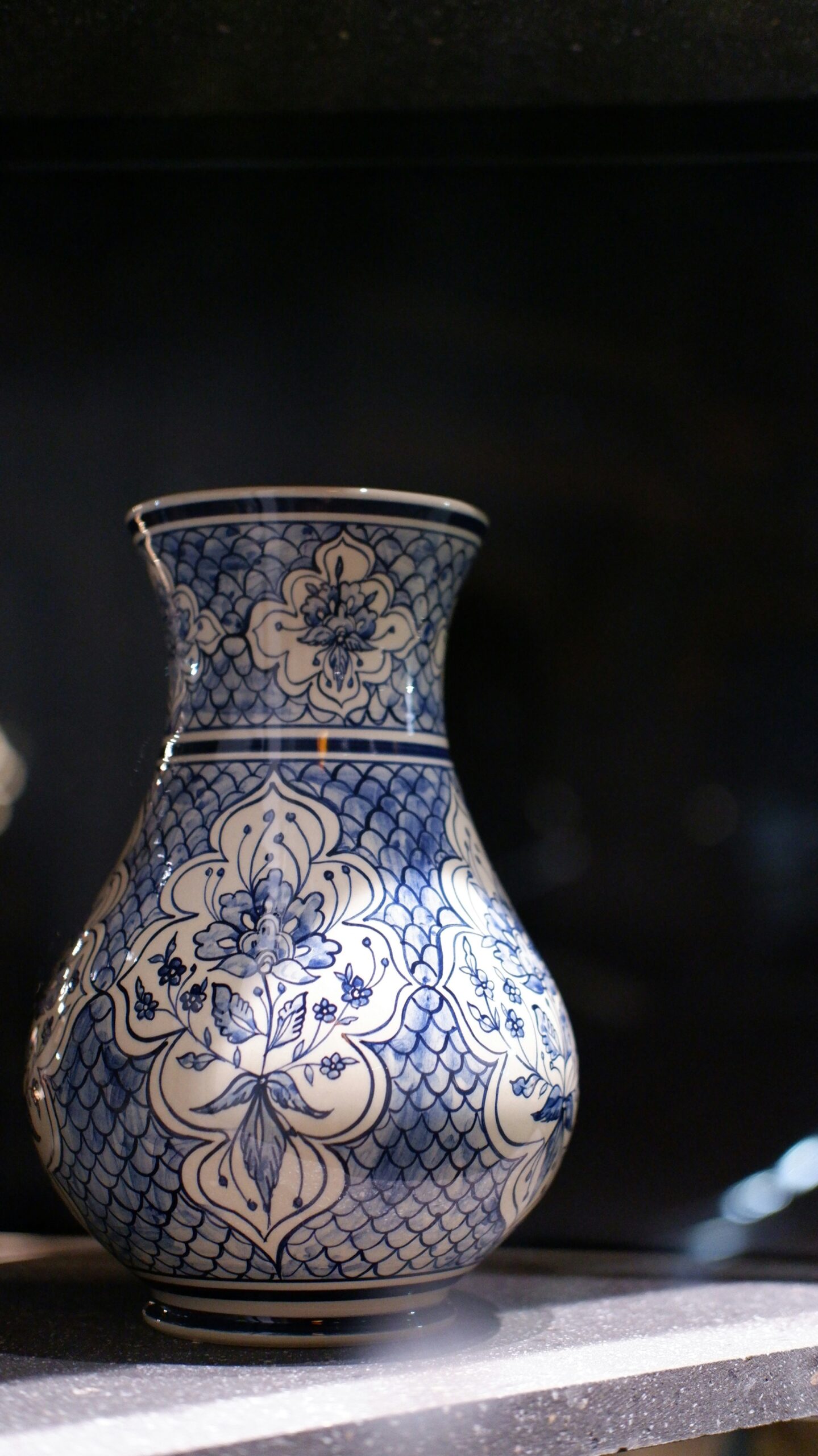
This is where the work takes true shape. Artisans glaze the dried pottery with a clear white glaze to create a blank canvas for painting. The artisans paint with fine brushes in clear white glaze which are sunk onto the dried pottery, using natural pigments (most commonly cobalt oxide), and simulate floral patterns, geometric shapes and occasionally Arabic calligraphy.
3.Why Is It Blue? The Color That Defines a Culture
You may be asking why blue?
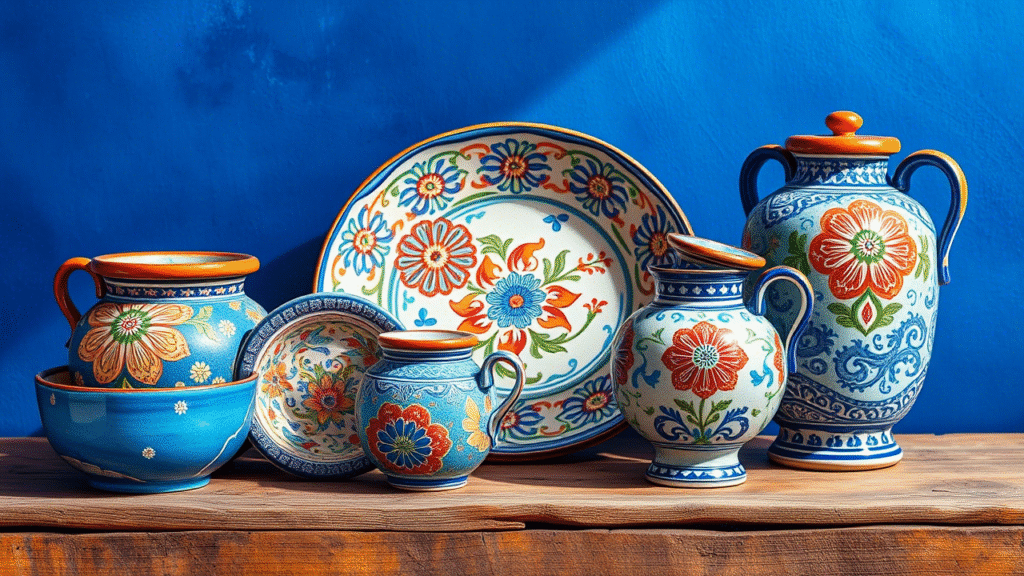
Blue has always been a prominent color in both Islamic and Persian aesthetics. It signifies a sense of peace, a sense of spirituality, and a sense of infinity an appropriate color for a craft that was born under the auspices of Sufi saints and the Mughals. The color of Multani pottery, known as “Multani blue,” is a soft turquoise dreamy shade of blue that conjures desert skies and ancient courtyards.
There is a reason that blue stands out against all of the colors of the other pottery; it has meaning beyond its aesthetic.
Blue represents the connection and balance between nature and creation, between earth and the heavens. Every single brush stroke of blue stands as a reflection of the past, and recognition of the present.
4.The Designs: A Language Without Words
Take one look at a piece of Multani blue pottery, and you can spot the thoughtful narratives within these forms. The patterns widely found include:
Floral Patterns, featuring roses, jasmine, and peonies rendered carefully in swirling vines that convey growth and rejuvenation.
Any sort of Geometric Shape, including symmetrical patterns given so much significance in Islamic architecture that accentuates balance and order.
Orthographic patterning, where sometimes lines of poetry or verses of blessing are included to encourage spirituality.
As a whole, these designs were not taken lightly and followed a rhythm, an expression informed by line, repetition, style that speaks of grace, patience and intentionality. Every line made in routing the design of the piece, is intentioned, every curve drawn is intentional.
5.A Dying Art Revived
Like many traditional crafts, Multani blue pottery has been dealing with problems. With the advent of industrialisation and better forms of manufacture, handmade items were no longer as fashionable. Younger artisans left the craft for better prospects, and the skills of the young apprentices were ultimately lost.
The situation for all of its difficulties may yet turn out alright.
There is an increasing effort to promote and revive this heritage. Many craft oriented organisations, government support, and concerned individuals have taken up the cause of multani potters. In addition to the efforts of the artisans, designers integrate Multani motifs into fresh, modern homeware, fashion accessories, as well as structural elements, showing previously hidden market opportunities. International markets have also become aware of cottage industries, showing an appreciation for the originality and authenticity of handmade blue pottery.
Now there are artisan workshops and training centres emerging in the area to teach young artisans the craft skills of their forefathers. There are still many potential opportunities for women to access the craft trade, allowing them to earn an income while holding onto cultural identity.
6.Why It Matters Today
Living in a world of rapid messaging and disposable things, Multani blue pottery reminds us that there are slower, more considered approaches to living. It is an art that takes time, and care, and effort, all things that are often lost on us in the busy lives we lead.
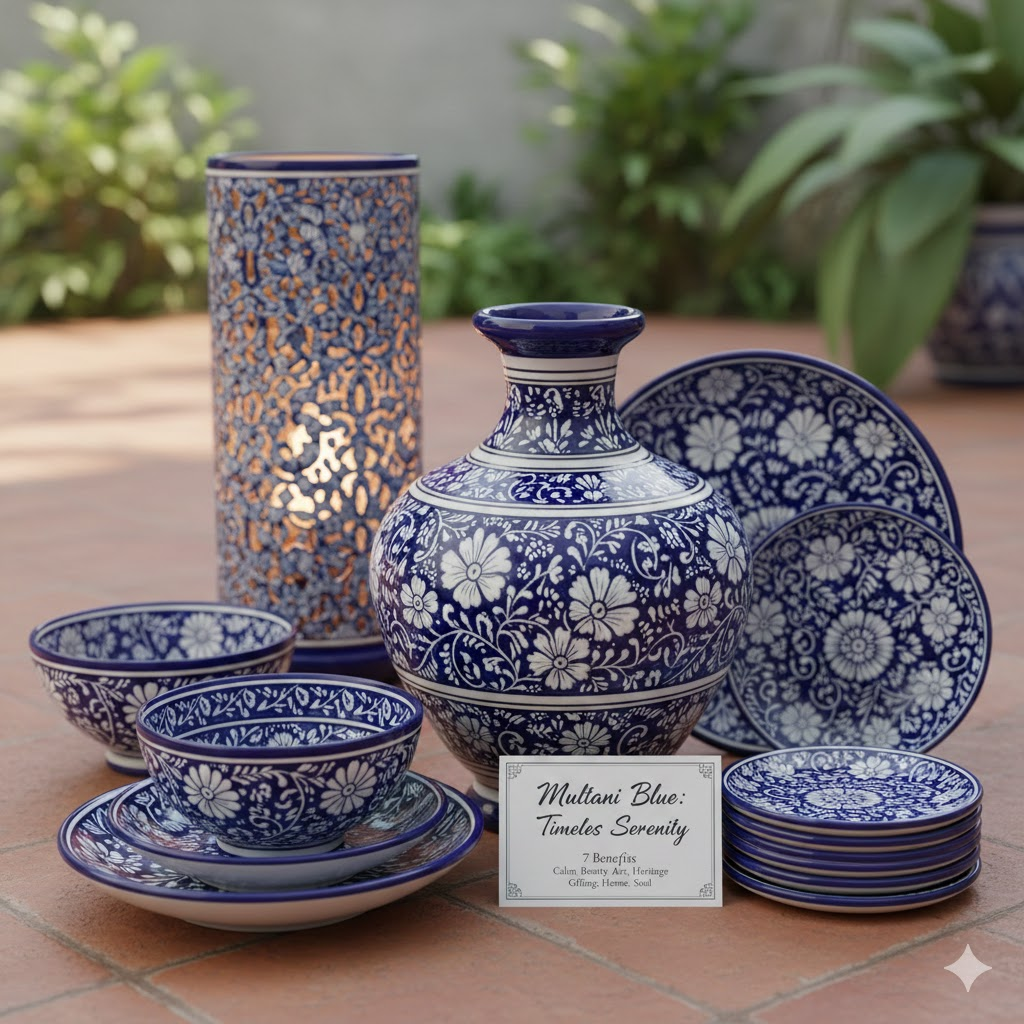
Being the owner of a Multani blue pottery object means you are an owner of history. That you are supporting sustainable practices, ethical craft, and community. It means you are filling your space with beauty that was not hurried, or replicated, that was made with care and intention.
Whether it be a decorative tile on your wall, a hand-painted vase, or a serving plate at the dinner table, each object has a history; and when someone asks you where you got it, you get to tell that story about a city, a craft, and a color that really changed how we think of clay.
7.How You Can Support Multani Blue Pottery
If you have been inspired by this craft, and want to help keep it alive, you can do one of a few things:
Purchase authentic Multani blue pottery pieces. Make sure they are from certified artisans or wholesaler or fair trade shops, and avoid items that are mass produced and reproduced.
Offer your knowledge about the craft. Tell others about it whether friends and family or social media, and spread awareness to help preservation and awareness.
Visit Multan, Pakistan: if you ever go to Pakistan, definitely stop by Multan to enjoy all the bustling bazaars, artisan workshops, and to see the craft for yourself. Visiting where and while the craft is made gives you a whole new level of appreciation.
Support apprenticeships and training programs: many NGOs and cultural foundations offer training programs for young artisans. Donating money and/ or time can be beneficial.
8.Conclusion: A Tribute to Timeless Beauty
Multani blue pottery is more than simply a craft; it encompasses resilience, creativity, and cultural pride. It reminds us that beauty doesn’t always arise from pace and convenience, but rather sometimes it arises from the slow and intentional strokes of paint brush, the hum of kiln, the person behind that built pottery who knows their life work will last forever. So next time you see that iconic blue shine, remember: you are not just seeing pottery, you are seeing heritage , history , and heart !
That is the magic of Multani blue pottery!
1. What makes Multani Blue pottery unique?
Each piece is handcrafted using centuries-old techniques from Multan, Pakistan, and features vibrant cobalt-blue motifs inspired by Persian and Islamic art making it a true heritage treasure.
2. Is Multani Blue pottery functional or just decorative?
It’s both! Traditionally used for water storage (thanks to its natural cooling properties), today it’s prized as elegant, food-safe décor for modern homes.
3. How can I care for my Multani Blue pottery?
Hand-wash gently with mild soap, avoid sudden temperature changes, and display away from direct sunlight to preserve its vivid blue hues and intricate hand-painted details.

Leave a Reply