


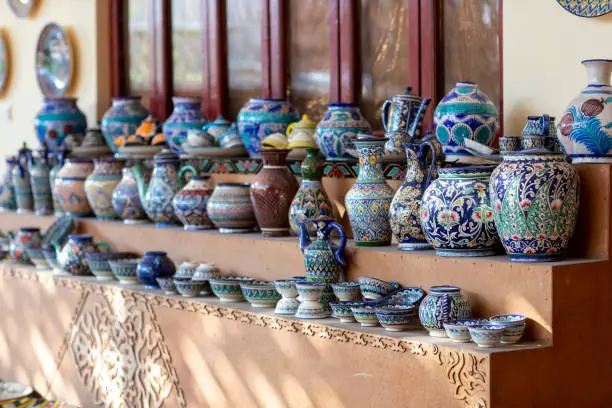
7 Stunning Secrets of Multani Blue Pottery: How Ancient Clay Transforms Into Cosmic Art
Introduction
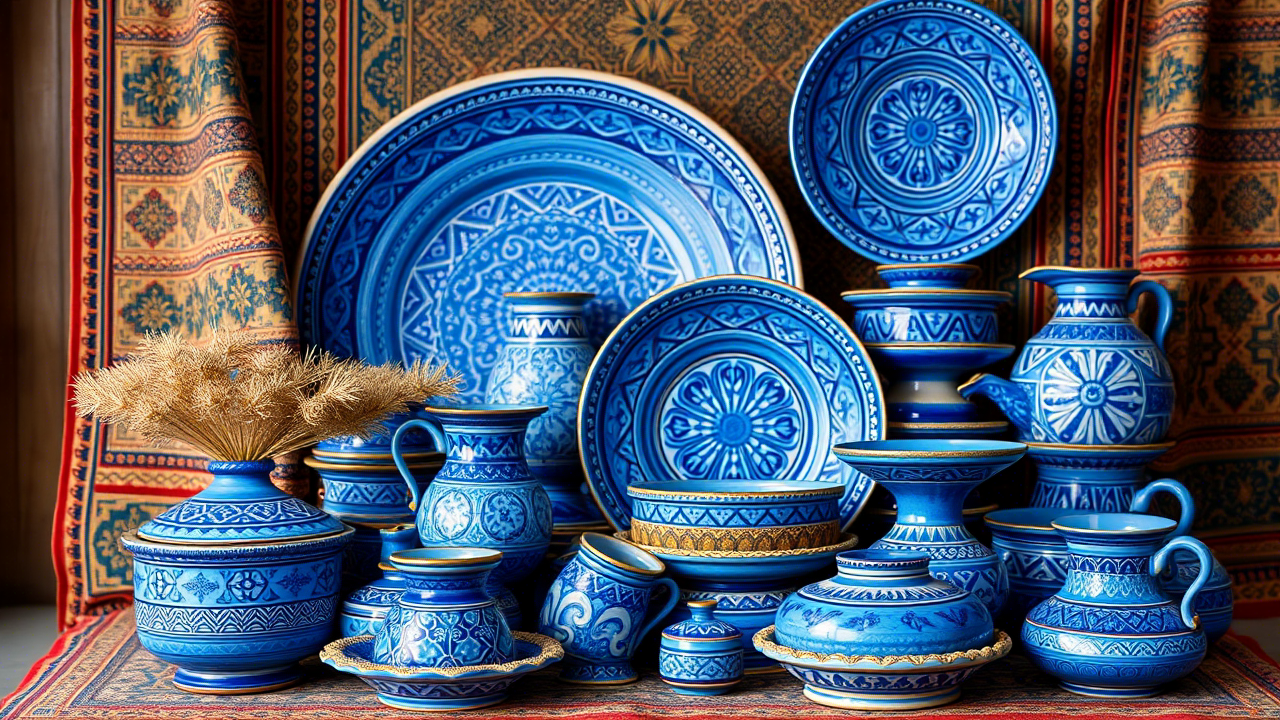
Picture a piece of pottery so captivating it appears to have the sky trapped within its glaze. The wonder of Multani Blue Pottery, an ancient Indian craft that has dazzled art lovers for centuries and has become a fixture in modern design. Hailing from Multan(Which is now in Pakistan), this ceramic tradition employs cobalt blue coloring, floral patterns, and white detailing.
In this article, we will take friends and readers from a fist full of clay to the cosmic scale of inspiration behind each design, Following the history, materials, techniques, symbolism, and contemporary reunion of Multani Blue Pottery .
Table of Contents
1.The Birthplace: Ancient Multani Blue Pottery
The journey of Multani Blue Pottery begins in Multan, a city founded at the crossroads of the Silk Route (South and Central Asia), which was once a vibrant trading and cultural hub. The “City of Saints” was a melting pot of art influences and styles. While spiritualism and Sufism flowed graciously through Multan , artistic beauty flourished too. The Persian tradition flourished with the natural craftsmanship of the local artists creating a unique tradition of glazing which ended up being known as Multani Blue Pottery.
Multani Blue Pottery is said to have been introduced in Multan by Turkic (Yūsufzai) invaders and Persian artisans, from the 14th century to the 16th century during the time of the Mughal Empire. Unlike traditional Indian pottery fired with earthenware or stoneware where, clay is simply colored, Multani potters developed a new technique by using ground glass, and grind Quartz and pure white clay. Multani Blue Pottery is lightweight and it can be replicated to a porcelain-like finish, and it is much stronger, this process was a blend of both local craft traditions and Persian craft.
2.Cultural Significance of Multani Blue Pottery
Through the Ages
Multani Blue Pottery ultimately grew to symbolize more than just decorative art, it embodies grace, sophistication and, most importantly, spiritual harmony. This art form has adorned palaces, mosques, and homes, and has even been used in architectural embellishments, including tiles and dome work. In Islamic art, blue represents peace, spirituality and infinity motifs are prevalent in the designs of Multani Blue Pottery.
The craft lost popularity as the country faced political upheavals and migration patterns shifted, following Partition in 1947; Despite this, these artisans continued the traditions they grew up with and crossed borders to continue this heritage in Rajasthan, particularly in Jaipur, where artisans have now preserved; and continue to grow, this heritage.
3.The Art of Creation, Materials and Techniques
1: The Special Multani Mix
Unlike regular pottery, Multani Blue Pottery is not made only from regular clay. It is made from a unique combination of:
Crushed glass
Ground quartz
White clay (Multani mitti)
Gum arabic or natural glue
This combination gives the materials the characteristic translucency and smoothness. However, this combination also makes it more difficult for artisans, as it cannot be formed with a wheel, and must be hand-formed or pressed into plaster casts.

2: Shaping the Soul
Because the body is not plastic, it is shaped by plaster molds. Each mold is made to imitate the traditional forms — vases, plates, tiles, bowls, and decorative panels. Once the mix is pressed into the mold, it can dry; this is important to dry slowly otherwise it will crack.
3: Hand-Painted Perfection
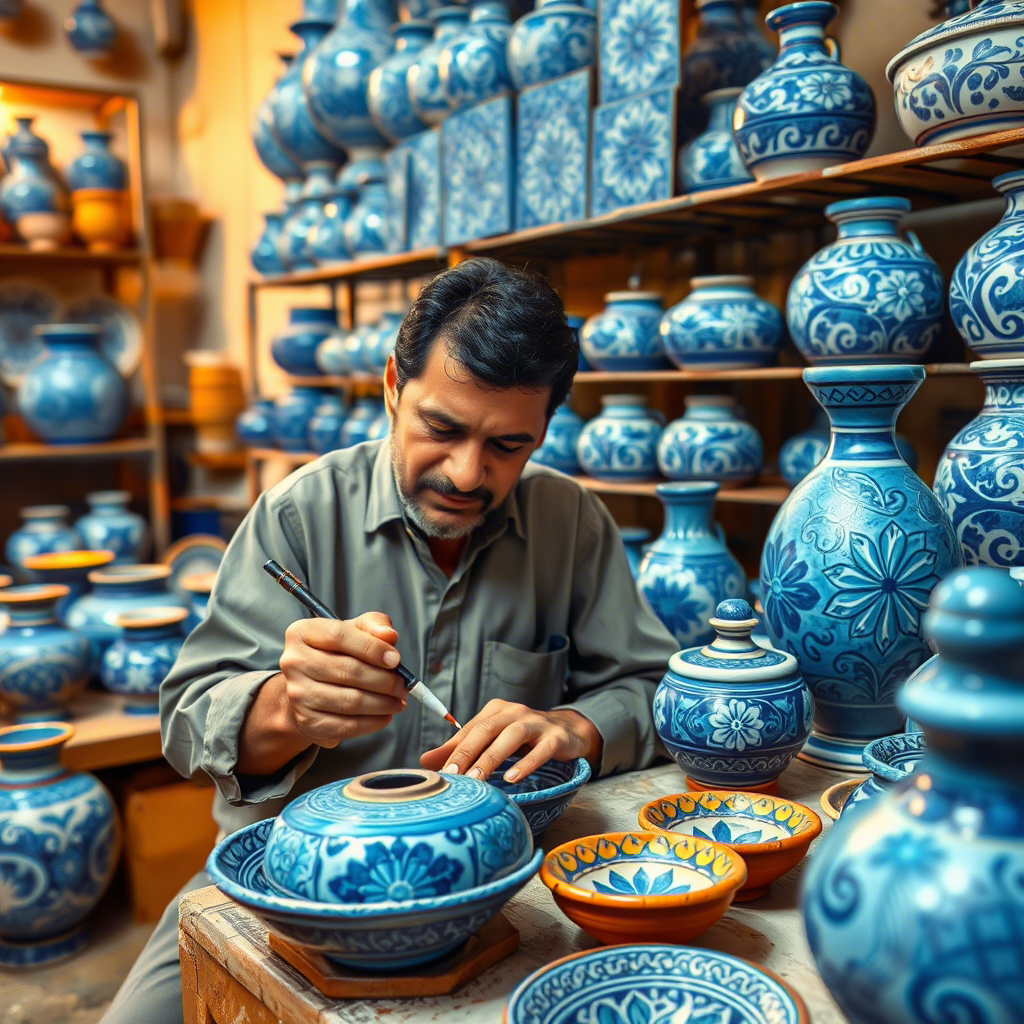
Now that the base is finished, the real art form begins. Talented painters used fine hair brushes made from squirrel or goat hair, to paint very intricate floral, geometric, and arabesque patterns. The pattern is first drawn freehand or with the help of pricked paper templates, then filled in with cobalt blue pigment in the details, accompanied by white slip highlights.
Each single stroke is intentional and requires years of practice to understand the right amount of fullness and subtlety.
4: Firing and Glazing
A clear, lead-based glaze is applied to the pieces after painting and the pieces are then fired in a kiln at high temperatures. This process changes the matte surface to a glossy, jewel-like surface. The final product is somewhat both brittle but durable it is decorative enough to be admired, and durable enough to endure for generations.
4.Design Secrets, Decoding the Patterns
1.Symbolism in Every Stroke
Beyond beauty, Multani Blue Pottery is a system of symbols. Some symbols used in Multani Blue Pottery may include:
Floral designs: These represents growth, beauty, and divine balance
Geometric forms: These express order and the rationality of art forms as well as faith as rooted in mathematics
Arabesques: These flowing, interlaced lines symbolize the infinity of creation
Calligraphy: Occasionally to represent spirituality and poetry
Multani Blue Pottery motifs are not applied without deep consideration and follow the strong rules of symmetry and proportion of Islamic design in particular.

2.The Power of Blue
The central blue-on-white color scheme is not only beautiful it has deep cultural significance. In many Eastern traditions, blue represents:
Heaven and divinity
Calmness and meditation
Protection and good luck
This color scheme is also rooted in Persian tile work and Chinese porcelain, both of which have influenced Multani artisans for centuries.
3.Balance and Symmetry
One of the most striking properties of multi -blue ceramics is the emphasis on symmetry and relapse. The design often contains radial layouts, mirror images and interlocking patterns that create a sense of rhythm and movement. These scenes reflect the balance between balance and broad philosophical ideals found in Islamic art.
5.The Craftsmen Behind the Magic
1.Generations of Mastery
Multani Blue Pottery is passed down through families, frequently from father to son or uncle to nephew. Young apprentices begin by means of grinding materials and preparing pigments earlier than progressing to sketching and eventually portraying.
Master artisans like Abdul Jabbar Khatri in Jaipur have performed a critical role in preserving the craft alive and adapting it for modern-day markets without compromising authenticity.
2.Challenges and Revival
Like many traditional crafts, Multani faces blue ceramic challenges such as:
Fall in interest between young generations
Competition from Mass Mimic
Formal training and lack of recognition
However, thanks to the government initiative, voluntary organizations and design contractors, demand has been resurrected in demand – especially in internal decorations, fashion products and luxurious household items.
6.A Cosmic Craft That Endures
From humble beginnings in the clay pits of Multan to inspiring modern-day layout around the world, Multani Blue Pottery is greater than just a craft it’s a testimony to human creativity, resilience, and splendor. Each piece tells a tale, connecting us no longer simplest to the beyond however also to the cosmos through its celestial hues and countless patterns.
Whether you are an artwork lover, a dressmaker, or certainly a person who appreciates splendor, Multani Blue Pottery offers a window into a global in which culture meets imagination and in which each brushstroke holds the echo of centuries.
7.Modern Inspirations, Multani Blue Pottery Today
Interior design and home deck
Multani Blue Pottery has found a new life in modern interiors. Its timely elegance is perfect for this:
Setting and food sets
Wall panel and backsplash
Lamps and plants
Mirror and car dream
Designers love how it easily mixes with both rustic and minimal styles, and provides a touch of global attraction anywhere.
Fashion and accessories
From hand-painted jewelry boxes to ceramic clutches and telephones cases, Multani motifs are now adapted to fashion style products. Collaboration between traditional craftsmen and modern designers opens exciting new roads.
Continuous and moral craftsmanship
As consumers become more aware of stability, Multani provides an environmentally friendly alternative for handmade craft factory -produced objects such as Multani Blue Pottery. The material is natural, the process is not illuminated, and each element is one of each type.
1. Why is Multani Blue Pottery called “cosmic art”?
The iconic cobalt blue glaze of Multani pottery doesn’t just mimic the sky it was historically inspired by the night skies of Sindh and the celestial motifs of Sufi mysticism. Artisans believed the deep blue trapped divine energy, turning everyday vessels into spiritual canvases. Each swirl and dot echoes ancient star maps, making every piece feel like a fragment of the cosmos, hand-painted in clay.
2. Can I use Multani Blue Pottery for food or drinks?
Yes when made traditionally, Multani pottery is food-safe. The glaze is derived from natural minerals (like cobalt oxide) and fired at high temperatures, creating a non-toxic, durable surface. However, avoid sudden temperature changes (like putting hot food into a cold bowl), as hand-thrown clay can be more delicate than mass-produced ceramics. Treat it with care, and it will serve you and your meals beautifully for decades.
3. How is Multani Blue Pottery different from other blue ceramics like Persian or Chinese blue-and-white?
Unlike the precise brushwork of Chinese porcelain or the geometric symmetry of Persian tiles, Multani pottery is wilder, freer almost improvisational. Its designs flow like desert winds: organic florals, peacocks in flight, and abstract calligraphy inspired by Sufi poetry. The blue isn’t just a color it’s a mood. And because each piece is hand-molded, no two are alike. That’s not a flaw. It’s the soul of the craft.

Leave a Reply